What the event is
The ADAC Hockenheim Historic is a historic motorsport weekend at the Hockenheimring in Baden-Württemberg, close to Mannheim and Heidelberg. It brings together historic single-seaters, touring cars and sports cars, and it has been presented as a tribute to Jim Clark, the Scottish world champion who lost his life at Hockenheim in 1968. That connection gives the event an emotional weight beyond the racing itself.
For Porsche, BMW and Mercedes-Benz fans, the headline draw is usually the touring car and GT content, where German machinery from several decades appears on the same grid. Grids, timetables and ticket categories vary year to year, so confirm details with the Hockenheimring and ADAC before you travel.
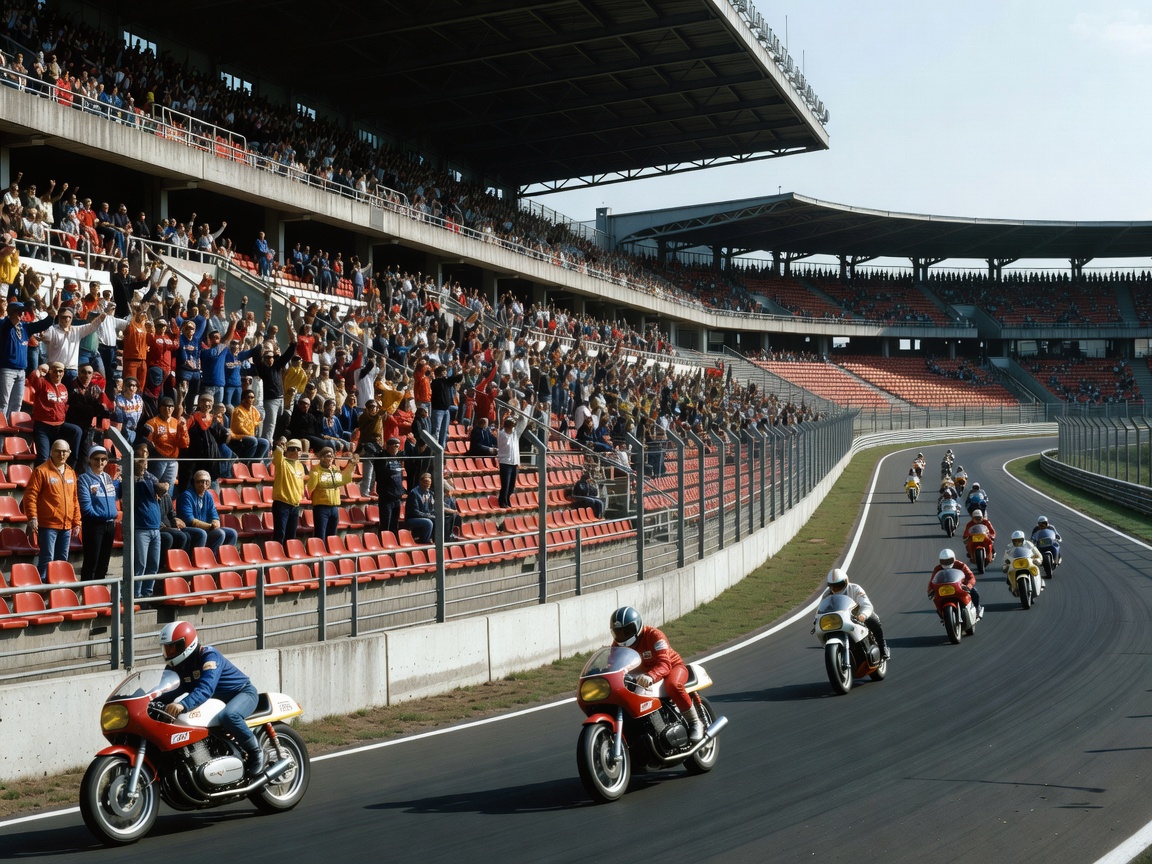
The circuit and where to watch
The Hockenheimring was built in 1932, and its current Grand Prix layout, measuring 4.574 km, dates from a 2002 redesign that replaced the long forest straights with a tighter, more spectator-friendly loop. The Motodrom — the stadium section with grandstands wrapped around the final part of the lap — is the defining feature. From a good seat you can follow cars through several corners without moving, which is ideal for families and photographers alike.
The hairpin (Spitzkehre) is the classic overtaking spot, where heavy braking produces the most wheel-to-wheel action. For historic racing, the paddock is equally important: it is compact, so walking between race preparation, club displays and the grandstands is quick.
Machinery to look for
The late-1980s and early-1990s touring car era, when BMW and Mercedes-Benz built homologation specials for competition, is a natural focus for German historic grids. Porsche's presence often comes through GT classes and legendary road cars displayed by clubs. The figures below are factory specifications for landmark models of that era.
Homologation heroes · factory figures
Landmark models of the era; cars at the event vary and racing versions differ from road specifications.
Bar scale: 0–520 PS
Getting there
This is the most public-transport-friendly circuit event in our guide. Hockenheim has its own railway station, and Mannheim Hauptbahnhof, a major long-distance hub, is a short regional train ride away. By car, the circuit sits close to the A6 and A61 motorways. Accommodation is easier to find than in the Eifel, thanks to nearby Mannheim, Heidelberg and Speyer. Speyer is also home to the Technik Museum Speyer, a worthwhile extra stop for anyone interested in vehicles and engineering.
Tickets and budgeting
We do not publish prices. Expect day and weekend general admission, reserved grandstand seating in the Motodrom and paddock access as part of or in addition to the ticket. Some historic weekends offer reduced admission for young visitors; check the current terms. Budget for parking or train fares, circuit food and, if staying over, a hotel in one of the nearby cities.
Pros
- Excellent rail and motorway access
- Stadium sightlines from the Motodrom
- Compact, walkable paddock
- Plenty of accommodation in nearby cities
Cons
- Less scenic than the Eifel
- Shorter lap means less variety of viewing spots
- Spring weather can be cool and damp
- Motodrom seats in demand for peak sessions
Hockenheim Historic vs Nürburgring Classic
| If you want… | Choose | Why |
|---|---|---|
| Easy travel | Hockenheim | Rail station and nearby cities |
| Legendary scenery | Nürburgring | The Nordschleife and Eifel forests |
| Family comfort | Hockenheim | Compact site, stadium seating |
| A road-trip weekend | Nürburgring | Rural roads and circuit villages |
Practical tips
- Take the train if you can; post-race traffic around the circuit can be slow.
- Choose a Motodrom seat high in the stand for the widest view.
- Pack layers and a waterproof for changeable weather.
- Ear protection is a must near the start line.